Ask Shift to explain a vulnerability, answer follow-up questions, and suggest a focused remediation.
Shift is Cysmiq’s AI security assistant. It works inside each vulnerability conversation and uses the available finding evidence to help you understand and remediate the issue.
Shift responses are generated for the current finding and may vary. Review suggested changes before applying them.
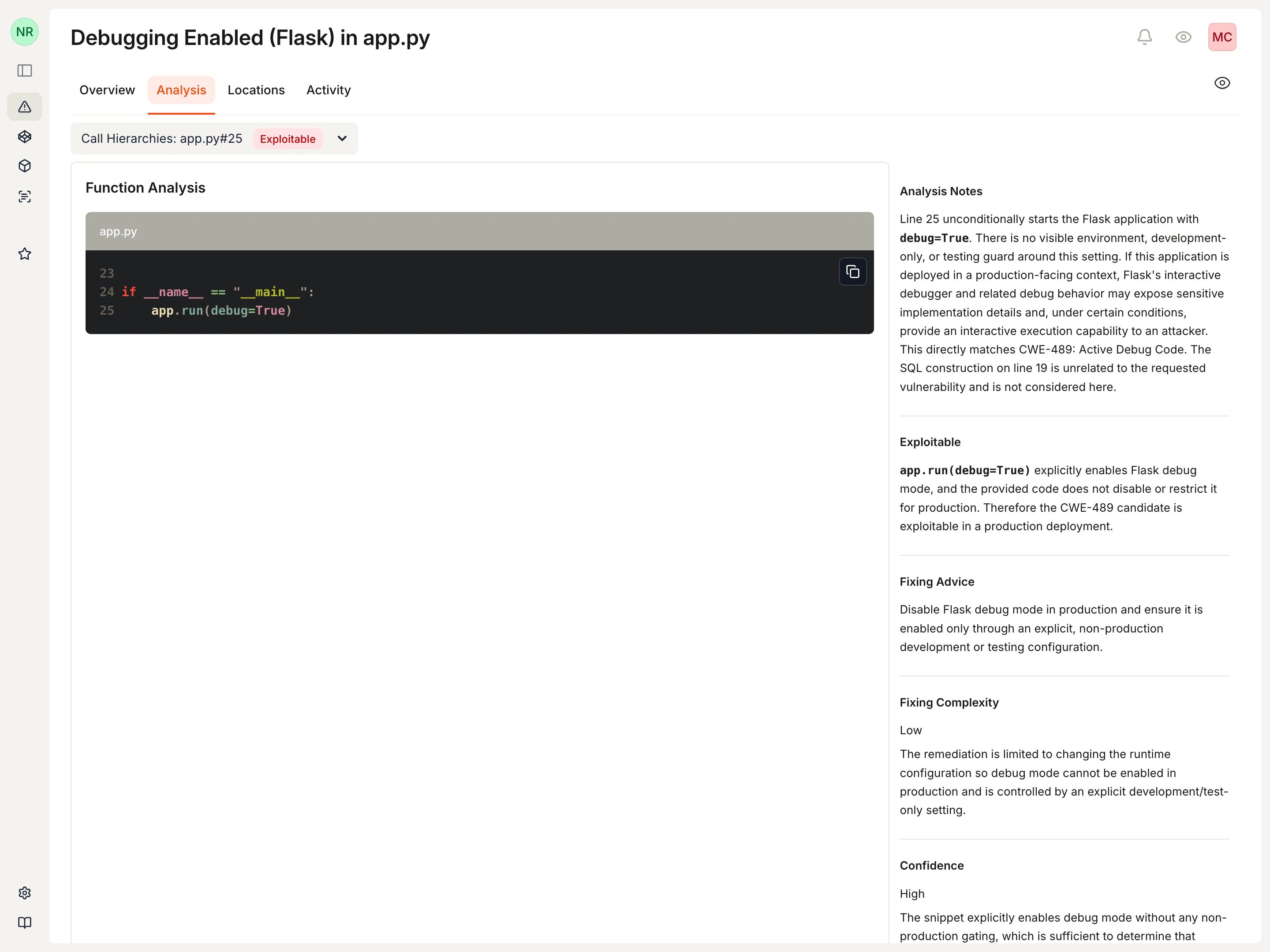
Open the vulnerability and review its Overview, affected Locations, and Analysis when available. Understand the vulnerable behavior and available exploitability evidence before asking for a remediation.
Analysis provides the evidence Shift can help you interpret.
In the conversation, select Explain this further. Cysmiq inserts an @Shift prompt into the comment field without sending it. Edit the question to focus on the evidence or remediation detail you need, then send it.
The quick action inserts an editable prompt for Shift.
You can also start with an empty comment and mention @Shift directly.
3
Use your preferred language
Ask the question in the language your team uses. Shift replies in the language of your latest message unless you request another language.
Example of Shift explaining the finding in German. Generated responses vary.
Continue the conversation when you need a simpler explanation, a narrower answer, or clarification about specific evidence.
4
Generate a remediation
Select Generate a fix to insert a remediation request. Edit the prompt when you need to add repository constraints, preferred patterns, or a narrower scope.Shift uses context appropriate to the finding:
Code vulnerabilities: relevant source and analysis context when available
Dependency vulnerabilities: package, version, manifest, and advisory details
Secrets: location and available secret evidence
Example of a focused code remediation from Shift. Generated responses vary.
5
Review and verify the change
Treat the response as a proposed remediation. Before applying it:
Confirm that it addresses the vulnerable behavior and cited evidence
Check that referenced files, packages, and advisory details match the repository
Adapt the change to the repository’s conventions and deployment model
Review the resulting diff and run the relevant tests
Push the change and confirm the follow-up scan resolves the finding